
Your Child’s Autism Diagnosis: A Parent’s Guide to Understanding and Support
Receiving an autism diagnosis for your child often brings up a whirlwind of emotions. You might feel a sense of relief at finally having some answers, but also confusion, some worry, and lots of questions. Many parents wonder what it means for their child’s future and feel overwhelmed about the decisions they have to make next.
It’s Okay to Feel the Way You Do
There is no ‘perfect’ way to process this. Some days you might question past decisions and wonder if you missed something earlier on. Other times, you might feel an intense pressure to act quickly but don’t quite know where to begin.
An autism diagnosis isn’t a prediction of what your child will or won’t become.
This diagnosis is a window into how they experience the world, communicate, and learn. With this understanding comes the opportunity to offer your child support that works for them.
You don’t need to have everything figured out today. Taking the time to learn and ask questions is a steady, proactive place to start.

What an Autism Diagnosis Really Means
Autism is a way of experiencing and processing information.
When a child receives an autism diagnosis, it means their brain is wired a bit differently, not that something is wrong.
Because autism exists on a spectrum, no two children with autism are exactly the same. One child might struggle with spoken communication, while another might find sensory input or changes in routine extremely challenging. Every child has their strengths and areas where they could use extra support.
Understanding these individual differences is key to avoiding a ‘one size fits all’ approach and choosing support that works for your child.
It’s also important to remember that autism isn’t caused by parenting choices or anything you did or didn’t do.
Understanding the Different Types of Autism
You may come across references to different types of autism, especially when reading older resources or speaking with families who received diagnoses years ago.
In the past, specific labels like Asperger’s syndrome or pervasive developmental disorder not otherwise specified (PDD-NOS) were used. Today, these are all included under one single diagnosis called Autism Spectrum Disorder (ASD).
The term ‘spectrum’ helps describe the wide range of ways autism can show up. One child might use spoken language easily but find social interaction confusing, while another might communicate more comfortably through gestures or pictures. Both are simply different types of autism on that same broad spectrum.
What Autism in Children Can Look Like
After an autism diagnosis, a lot of those ‘little things’ you noticed suddenly start to make more sense.
When we talk about autism in children, these observations are less about one specific behavior and more about patterns in how a child communicates, plays or responds to their surroundings.
Some traits parents commonly notice include:
- Inconsistent eye contact during interaction.
- Using fewer gestures, such as pointing or waving to share interest.
- Spoken language developing more slowly.
- Fewer back-and-forth exchanges during play.
- Repetitive movements, sounds, or specific ways of playing.
- A strong need for predictability or difficulty with changes.
- Sensitivity to sounds, textures, or lights.
- Intense focus on specific toys, activities or topics.
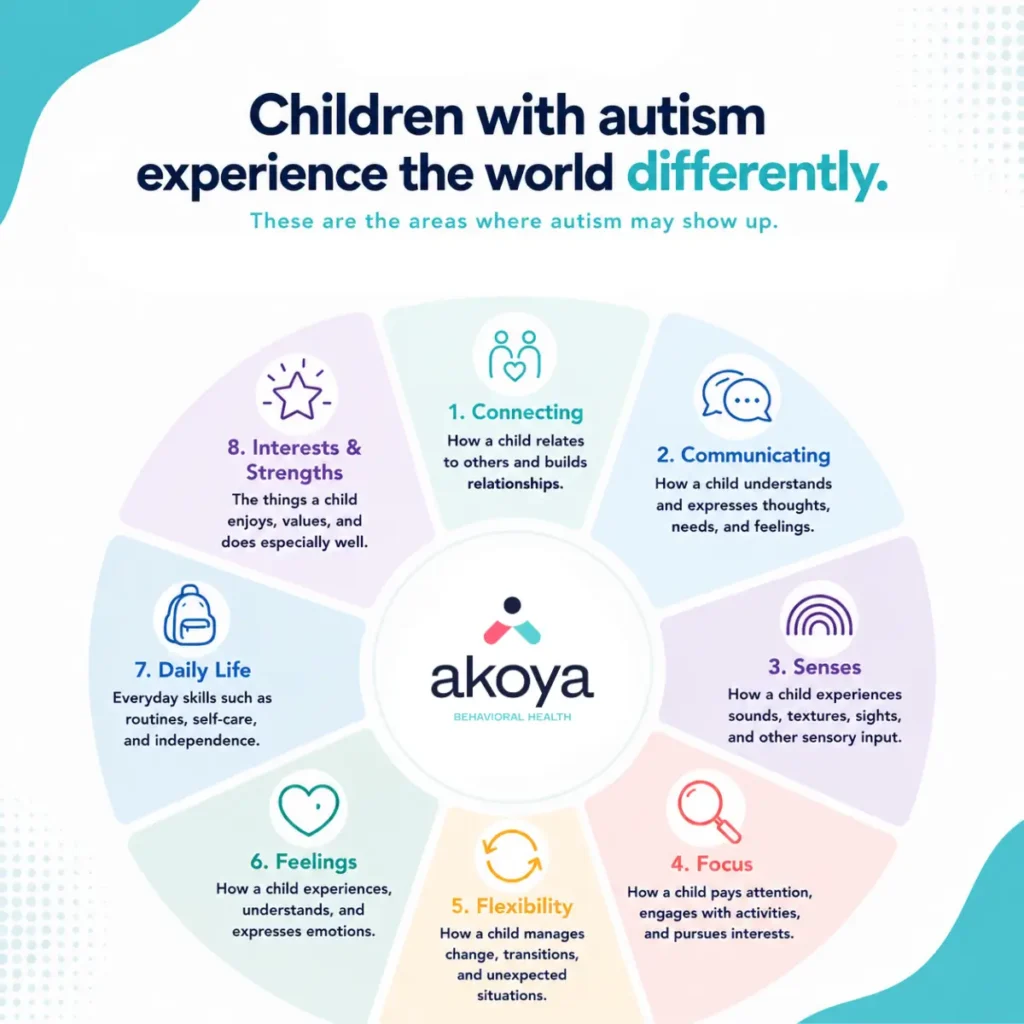
It’s important to remember that seeing one or two of these traits on their own doesn’t tell the whole story. Many young children show some of these behaviors as they grow and reach different stages. What professionals look for are patterns that continue over time and affect how a child communicates, interacts, or joins in with everyday life.
Understanding how autism shows up for your child can help you respond with more confidence and compassion. It can also make it easier to decide which supports might feel most helpful as you move forward.
What Comes After An Autism Diagnosis?
The “what now?” phase can feel overwhelming but there’s no single correct order to follow. Most families find it helpful to start with a quick chat with their pediatrician or a specialist to identify the best tools to support their child.
Common paths for support include:
- Speech therapy: To help with understanding language, using words, or alternative ways to share ideas.
- Occupational therapy: To help with everyday skills like dressing, feeding, and managing sensory sensitivities.
- Early intervention services: To provide support across many areas of development and offer parent coaching.
- Social skills support: To help children practice interaction and play in supportive, small-group settings.
- ABA therapy: Applied Behavior Analysis focuses on building practical, everyday skills for kids through positive, play-based experiences.
Not every child needs every type of support, and families often find that a combination works best. Taking the time to learn about your options and chat with professionals can help you decide what feels like the right fit for your little one and your family.

A Closer Look At ABA Therapy
ABA therapy is a common, evidence-based method to help children build the practical, everyday skills they need to navigate the world. For children with autism, this might mean finding their voice, learning how to play with others, mastering routines like getting dressed, or managing big emotions.
When it’s done with a focus on the child, ABA therapy is all about celebrating wins through play and real-life moments. Skills are broken down into tiny, manageable steps so your little one feels successful and supported every step of the way.
ABA therapy isn’t about changing who a child is. It’s about helping them communicate their needs, feel more comfortable in everyday routines, and grow their independence in a way that feels achievable for them.
Support That Meets You Where You Are
Receiving an autism diagnosis for your child can take time to settle in. Over time, many families find clarity by asking questions and connecting with supportive professionals.
If questions or concerns come up, a chat with your pediatrician or therapy providers can offer the reassurance and direction you need. You might also find it helpful to connect with other families who have walked a similar path and understand what you’re going through.
At Akoya, we’re here to offer support that feels thoughtful, personal, and grounded in who your child is. You are the expert on your little one and our role is to provide the guidance and care your family needs to find what works best.
If you’d like to talk through your questions or explore the next steps, feel free to reach out and schedule a consultation with one of our supportive team members.
Quick Answers for Parents
What are the first signs of autism?
Early indicators often show up as small patterns in how your child connects with the world. You might notice they don’t catch your eye as often or use gestures like pointing and waving. For some, language development follows a slower path, while others might find comfort in repetitive movements, need a strict routine, or feel overwhelmed by loud noises and bright lights.
Seeing one sign on its own doesn’t necessarily mean your child has autism. Patterns over time and across settings are what professionals look for.
How to get tested for autism?
If you’re feeling unsure, a chat with your child’s pediatrician is a great place to start. They can run a simple screening and, if needed, connect you with a specialist for a full evaluation.
A comprehensive autism evaluation typically includes observation, parent interviews, and standardized assessment tools. This is a helpful way to figure out if an autism diagnosis fits and which types of support will help your child thrive.