
Applied Behavior Analysis in Different Settings: What Parents Need to Know
When families first start looking into Applied Behavior Analysis (ABA), one of the biggest questions is often where therapy should happen. Some children receive support in a clinic, others at home, and some in school settings
A lot of parents worry about choosing the “right” setting or wonder if one option is better than another. In reality, the best fit often depends on your child’s personality, current goals, and what feels manageable for your family.
There isn’t one perfect path. Many families start in one setting and adjust over time as their child grows and their needs change.
Why the Setting Matters in ABA Therapy
Applied Behavior Analysis focuses on helping children build practical skills that support communication, independence, emotional regulation, and participation in everyday life
ABA therapy can take place in any environment where life happens. Some children thrive in a dedicated ABA center, together with other children while others feel more comfortable learning in familiar spaces like home or school
The setting influences:
- How skills are practiced
- Who is involved during sessions
- How learning connects to daily routines
- The types of social opportunities available
Understanding how each environment works can make the decision feel less overwhelming.

Clinic-Based ABA Therapy: What to Know & Consider
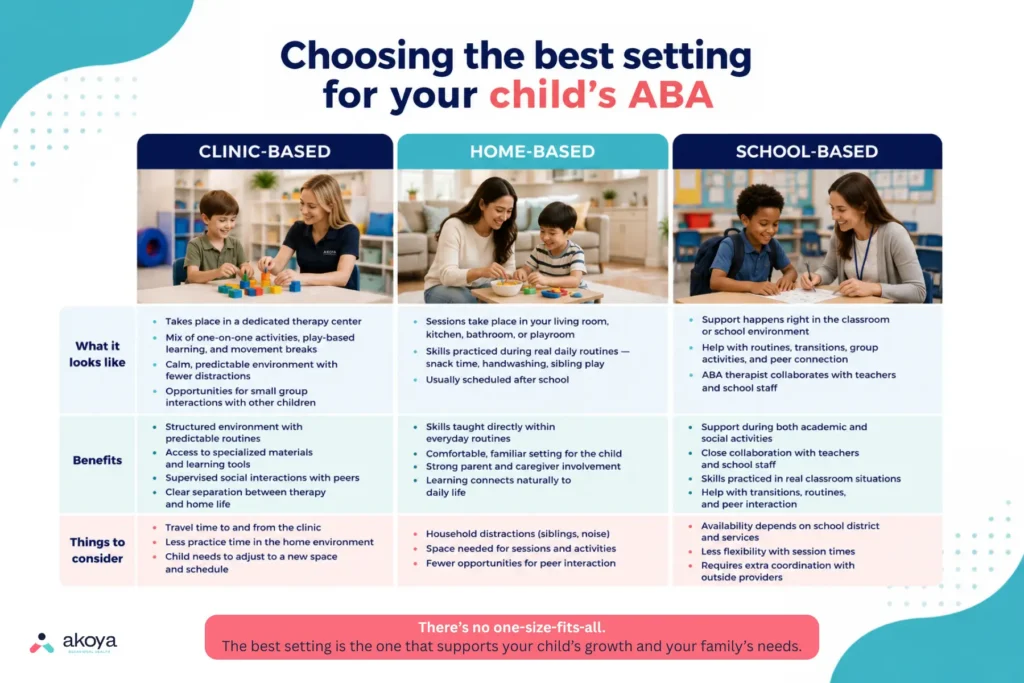
Clinic-based Applied Behavior Analysis takes place in a therapy center designed specifically to support learning and skill-building.
Sessions often include a mix of one-on-one activities, play-based learning, movement breaks, or small group interactions with other children. The environment tends to be calm and predictable, with fewer distractions, which can help some children feel more comfortable, focused, and confident during therapy.
Potential benefits of clinic-based ABA therapy include:
- A structured environment with predictable routines
- Access to specialized materials and learning tools
- Opportunities for supervised social interactions.
- Clear separation between therapy sessions and home life
Things you may want to think about:
- Travel time to and from the clinic
- Less learning time in the child’s home environment
- Adjusting to a new space and daily schedule
Clinic-based ABA therapy can be a great fit for children who feel more comfortable with routine, structure, and chances to practice interacting with other kids.

Home-Based ABA Therapy: What to Know & Consider
Home-based Applied Behavior Analysis usually happens after school. Sessions can take place in your living room, kitchen, bathroom, or playroom, depending on the skills being worked on.
For example, a session could involve practicing communication during snack time, working on handwashing at the sink, or building play skills with siblings using familiar toys and activities.
Potential benefits of home-based ABA therapy include:
- Skills taught directly within everyday routines
- Learning in a comfortable, familiar setting
- Strong parent/caregiver involvement
- Practice that connects to daily life
Things you may want to think about:
- Household distractions such as siblings or noise
- Space needed for sessions and activities
- Fewer opportunities for peer interaction during therapy
Many families find home-based ABA therapy helpful when they want learning and support to fit naturally into their child’s daily experiences.

School-Based ABA Therapy: What to Know & Consider
School-based applied behavior analysis focuses on supporting learning and behavior in the classroom or school environment right where a huge part of your child’s day happens
Support may include help following classroom routines, working through transitions, joining in on group activities, or connecting with peers. ABA therapists often collaborate with teachers and school staff to support consistency across the day.
Potential benefits of school-based ABA therapy include:
- Support during academic and social activities
- Collaboration with teachers and school staff
- Skills practiced in real-classroom situations
- Help with transitions, routines, and peer interaction
Things you may want to consider:
- Availability depends on school district and services
- Less flexibility with session times
- Extra teamwork needed with outside providers
For some children, school-based ABA therapy offers helpful support as they learn to manage classroom expectations and connect with peers.
How to Approach Choosing a Setting
Rather than trying to find the “best” option overall, it can help to think about what feels most supportive for your child right now.
These questions might be helpful:
- Where does my child feel most comfortable learning right now?
- Which setting fits best with our family’s schedule and energy?
- What skills are most important at this stage?
- How involved do we want to be during sessions?
- How does my child respond to transitions between environments?
Your answers might shift over time, and that’s completely normal.
The Role of the ABA Therapist
No matter where therapy takes place, ABA programs are guided by a Board Certified Behavior Analyst (BCBA).
The BCBA develops goals, tracks progress, and adjusts the therapy plan as your child grows and develops new skills.
Day-to-day sessions are often led by an ABA therapist, commonly a Registered Behavior Technician (RBT), who works directly with your child through play, routines, and structured learning activities.
Families are an important part of the process too. Regular communication, shared goal-setting, and practical strategies help ensure support continues outside of sessions.
How Akoya Supports You in Choosing the Right Setting
At Akoya, we understand that choosing between clinic-based, home-based, or school-based ABA therapy involves more than just comparing environments.
Our BCBAs take time to understand your child’s strengths, learning style, routines, and current goals while also considering what realistically works for your family.
Practical pieces matter too.
Insurance coverage can vary depending on where services take place. Some plans may cover clinic-based Applied Behavior Analysis more easily, while others may allow home or school support.
The Akoya team works with most insurance providers and community mental health services, and can help you understand:
- What your insurance plan may cover
- What settings are available to your family
- How authorizations and service hours work
- Whether changing settings later may require additional approval
We also help families think through day-to-day logistics like travel time, scheduling, school routines, and balancing ABA therapy with work and family life.
All of these pieces matter together.
The goal is to help you choose a setting that supports your child’s learning while still feeling sustainable and manageable for your family.
It’s Okay If the Choice Takes Time
Choosing between clinic-based, home-based, or school-based Applied Behavior Analysis doesn’t have to happen overnight.
Many families need time to ask questions, notice how their child responds in different environments, and figure out what feels realistic for their family.
It’s also common for needs and preferences to change. A setting that works well right now may shift later as your child grows, routines evolve, or goals change.
Flexibility is part of the process.
Giving yourself space to move slowly can help decisions feel more thoughtful and less pressured. Taking time to explore your options is not falling behind. It’s often an important part of finding support that fits your child and family.
Where to Go from Here
Choosing where Applied Behavior Analysis takes place is an important decision, and it’s okay if you don’t have all the answers immediately. This decision deserves time, thought, and care.
What matters most is finding support that helps your child feel understood, encouraged, and successful while also fitting into your family’s daily life.
Many families adjust settings over time as schedules, goals, and needs change. Having a team that can grow alongside your child can make the process feel much more manageable.
At Akoya, our BCBAs are here to listen to your questions, talk through your options, and help you explore what support may look like for your child.
When the time feels right, you’re welcome to reach out to schedule a consultation with our supportive team.
Quick Answers for Parents
What is Applied Behavior Analysis?
Applied Behavior Analysis (ABA) is an evidence-based therapy based on the science of learning and behavior.
It focuses on understanding how children learn, what influences behavior, and how supportive, consistent strategies can help them build new skills and positive behaviors in everyday life.
ABA helps children with autism and developmental disorders develop communication, social, play, and daily living skills while reducing behaviors that may interfere with learning or everyday routines.
Using positive reinforcement and structured teaching, ABA helps children learn and practice meaningful skills in ways that feel achievable, supportive, and rewarding.
Where Does Applied Behavior Analysis Take Place?
Applied Behavior Analysis can take place in a variety of settings, including a clinic, your child’s home, or a school environment. The best location often depends on your child’s individual needs, current goals, learning style, and what works best for your family’s daily routine.
Some children benefit from the structure of a clinic, while others learn best in familiar environments where everyday skills can be practiced naturally.