ABA Explained: What It Is & How It Can Help Your Child Thrive
If you’ve recently heard of the term Applied Behavior Analysis, or ABA therapy, you might be wondering what it means and whether it’s something that can help your child.
For many parents, ABA first comes up during conversations with a pediatrician, school staff member, or after an evaluation. It can feel like one more unfamiliar term thrown into an already emotional and overwhelming situation
You might be wondering what ABA therapy actually looks like day to day, whether it will feel supportive for your child, or if it’s even the right fit for your family. That uncertainty is completely normal.
ABA therapy is a supportive, evidence-based approach that helps children build practical skills for everyday life, communication, and independence.
Quick Answers for Parents
What is ABA?
ABA is a research-based form of behavioral therapy that helps children learn new skills while supporting positive, helpful behaviors in everyday life. It can also help reduce behaviors that make communication, learning, or daily routines more difficult.
ABA focuses on skills like communication, social interaction, play, and daily routines. It works by understanding how behavior is influenced by the environment and using positive reinforcement to encourage learning in supportive, encouraging ways.
What does ABA stand for?
ABA stands for Applied Behavior Analysis.
It is an evidence-based approach commonly used to support children with autism and other developmental disorders by helping them strengthen practical skills and build confidence in everyday situations.
What ABA Therapy Focuses On
ABA therapy is based on the science of learning and behavior. It looks at how children interact with their world and how we can teach skills in ways that make learning feel successful, not stressful.
Rather than focusing only on reducing challenging behaviors, ABA therapy places strong emphasis on teaching functional alternatives.
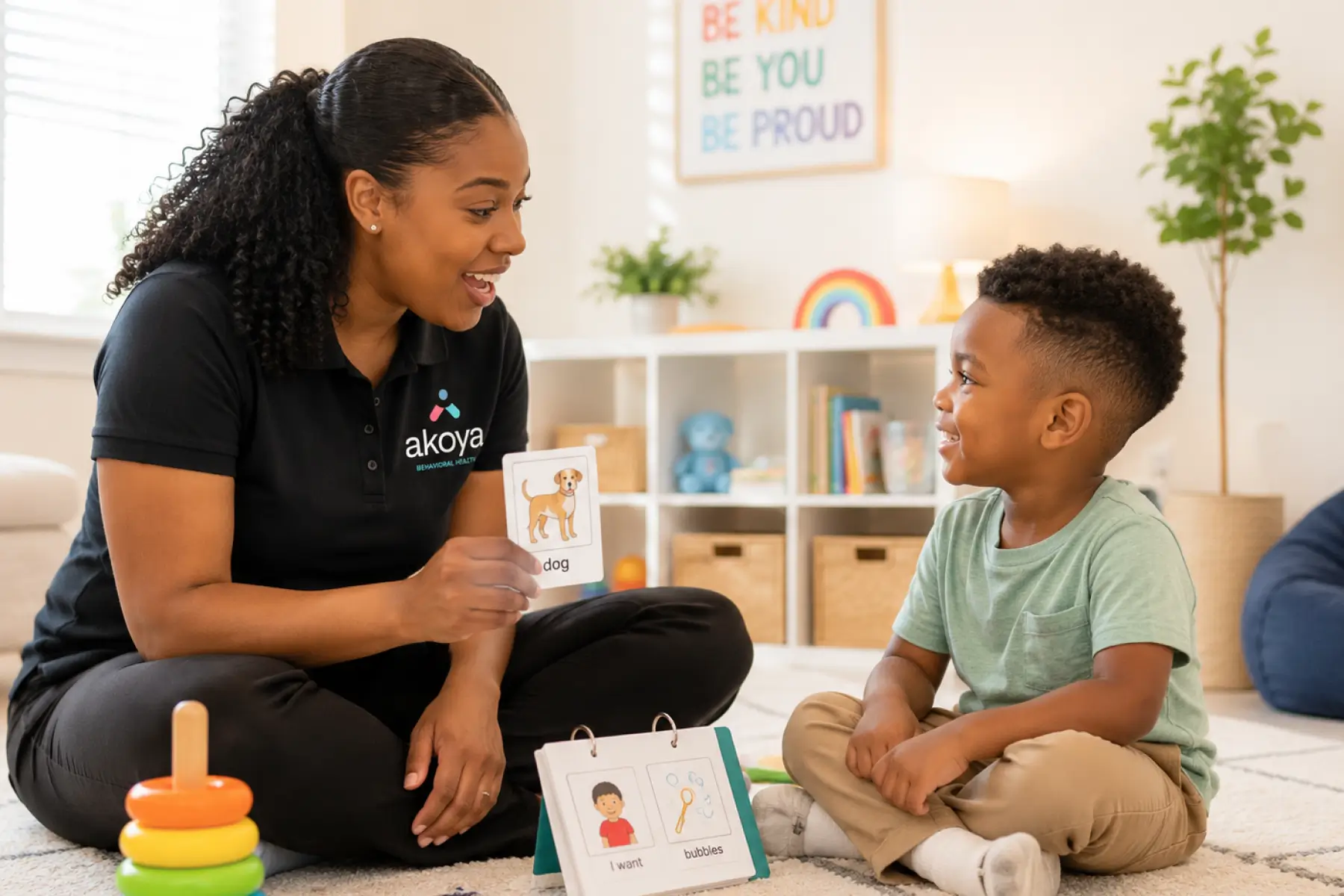
For example, if your little one gets upset because they want a favorite book, we support them in learning a gesture, picture, or word to ask for it instead of tantruming. It’s about giving them the tools to be heard and understood
The aim is to help children communicate more effectively, participate more fully in daily routines, and feel more successful in their interactions.
How ABA Therapy Works in Practice
ABA therapy is structured, but it’s also flexible and individualized – never “one size fits all”.
A Board Certified Behavior Analyst (BCBA) starts by getting to know your child – the things they love, their strengths, and the moments where they get stuck.
Goals are then created based on what will be most useful and supportive for your little one and family as a whole.
ABA services can happen at home, in a clinic, or even out at a park. Teaching often happens right in the middle of a game or a daily routine, so it feels natural and engaging rather than forced.
The Role of Positive Reinforcement
Positive reinforcement is the “secret sauce” of ABA therapy. When a child practices a skill and something positive follows, like a high-five or a favorite song, they’re more likely to use that skill again
This makes learning feel like a success rather than a chore. Over time, those little wins turn into consistent, confident habits.
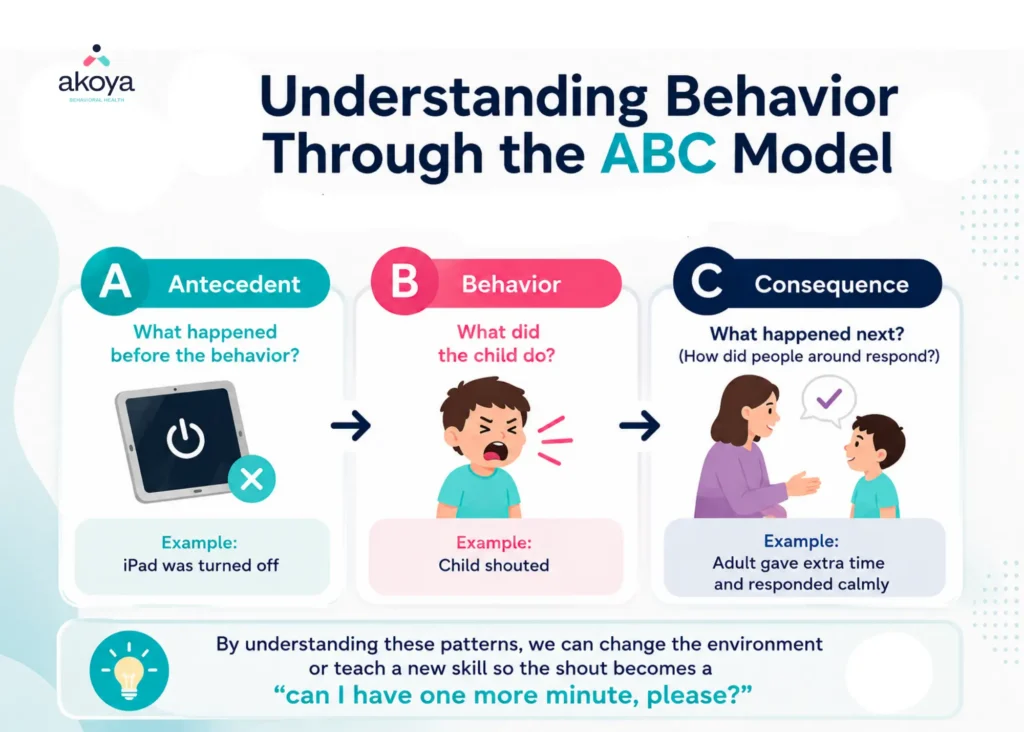
Understanding Behavior Through the ABC Model
To help support your child, we look at the patterns of their day through a simple lens:
- Antecedent: What happened before the behavior? (iPad was turned off)
- Behavior: What did the child do? (Child shouted)
- Consequence: What happened next? (How did people around respond?)
By understanding these patterns, we can change the environment or teach a new skill so the shout becomes a “can I have one more minute, please?”
Skills That ABA Therapy Can Help Support
Because every child is different, ABA services are tailored to what’s most helpful for your child right now and at a pace that’s manageable and encouraging.
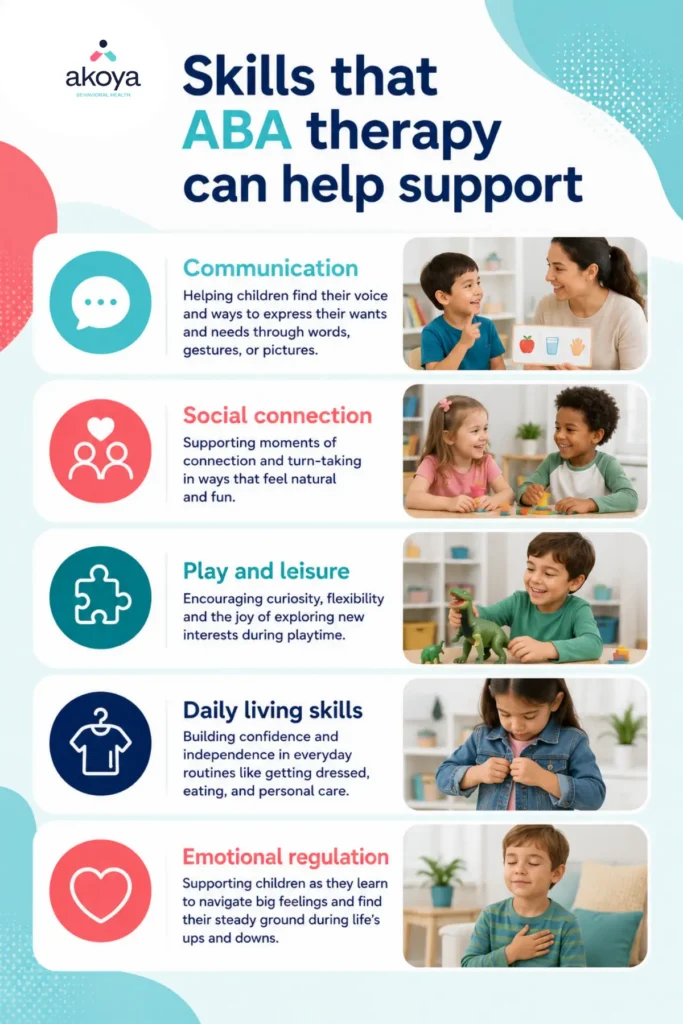
We often focus on:
- Communication
Helping children find their voice and ways to express their wants and needs through words, gestures, or pictures.
- Social connection
Supporting moments of connection and turn-taking in ways that feel natural and fun.
- Play and leisure
Encouraging curiosity, flexibility and the joy of exploring new interests during playtime.
- Daily living skills
Building confidence and independence in everyday routines like getting dressed, eating, and personal care.
- Emotional regulation
Supporting children as they learn to navigate big feelings and find their steady ground during life’s ups and downs.
Progress happens gradually with small steps adding up over time.
Is ABA Therapy Only for Certain Children
While ABA is considered the gold standard treatment for children with autism, the principles of applied behavior can support learning in many children with different needs
Many families find ABA services helpful for building communication, smoothing out daily routines, or supporting social skills. What matters most is whether this approach feels like a helpful fit for your child’s personality and your family’s life.
ABA is just one tool in the kit, and it’s often combined with speech or occupational therapy.
Who Provides ABA Services
ABA services are guided by a Board Certified Behavior Analyst (BCBA). BCBAs are specialists in the science of how children learn, focusing on evidence-based ways to help them with new skills.
Day-to-day sessions are usually led by a Registered Behavior Technician (RBT). They work closely with your child to build skills through play, with constant guidance from the BCBA to make sure everything is clicking.

What to Expect When Exploring ABA Service
Getting started usually begins with an intake and evaluation. This is a chance to get to know your child and decide if ABA therapy could be a helpful fit, as well as which areas might be most supportive to focus on first
You are involved from the very beginning. You’ll share your goals, ask questions, and get practical strategies you can use at home during your normal routines
Insurance can be a bit of a maze, and coverage often depends on your specific plan or where you live. Usually, you’ll need a recommendation from your doctor to get started.
While the paperwork can feel overwhelming, ABA providers are experts at navigating the fine print and can help guide you through the next steps.
How Akoya Approaches ABA Therapy
At Akoya, we believe support should be as unique as your child. Our approach is built on respect and a deep understanding of your child’s needs, strengths and preferences. We focus on practical learning through play helping with everything from first words to managing big emotions.
You are a partner in this process, and we focus on sharing practical guidance to implement at home in between sessions.
Every plan is tailored to fit your child’s interests so that growth feels natural and achievable.
Support That Helps Your Child Thrive
Learning about ABA therapy doesn’t mean you need to commit to anything right away. It’s okay to take your time, ask questions, and find what feels right for your family
If you’re feeling unsure, a chat with your pediatrician can offer some clarity and reassurance.
When you’re ready, the Akoya team is here to work closely with you and your family. Our role is to get to know your child, build on their natural strengths, and support them with tools that help them grow, connect, and thrive in everyday life
If you’d like to talk through your questions or explore next steps, feel free to reach out and schedule a consultation with our supportive, experienced team.