Worrying is part of being a parent. You find yourself watching, comparing and wondering. At the same time, you might start to question whether your child’s development is on track or if they might be delayed in some areas. These concerns are normal, especially in the early years, when so much is changing so fast. (You blink and your baby is now a toddler with opinions about everything.)
Getting familiar with what early development typically looks like and which signs may need a closer look, can help you feel more confident about deciding when it might be time to reach out to a pediatrician or child development specialist.
Noticing behaviours that may indicate delayed development
Many parents find themselves asking, “Is this normal?” or “Should I be concerned?”
Maybe your child doesn’t quite catch your eye the way other kids do. Maybe they’re not using as many words, or maybe daily routines like meals and bedtime feel harder than they seem to for others.
Because children’s development is so naturally varied, it can be genuinely hard to tell what’s age-appropriate and what might be worth exploring further. The most important reminder to hold onto is this: noticing differences doesn’t mean something is wrong. It means you’re paying attention.
No one knows your child the way you do, and your awareness is an important part of supporting your child.
Common signs of developmental delays
Not every unusual behavior is a cause for concern. Many toddlers go through phases that come and go quickly. What matters most is whether certain patterns continue over time or across different settings.
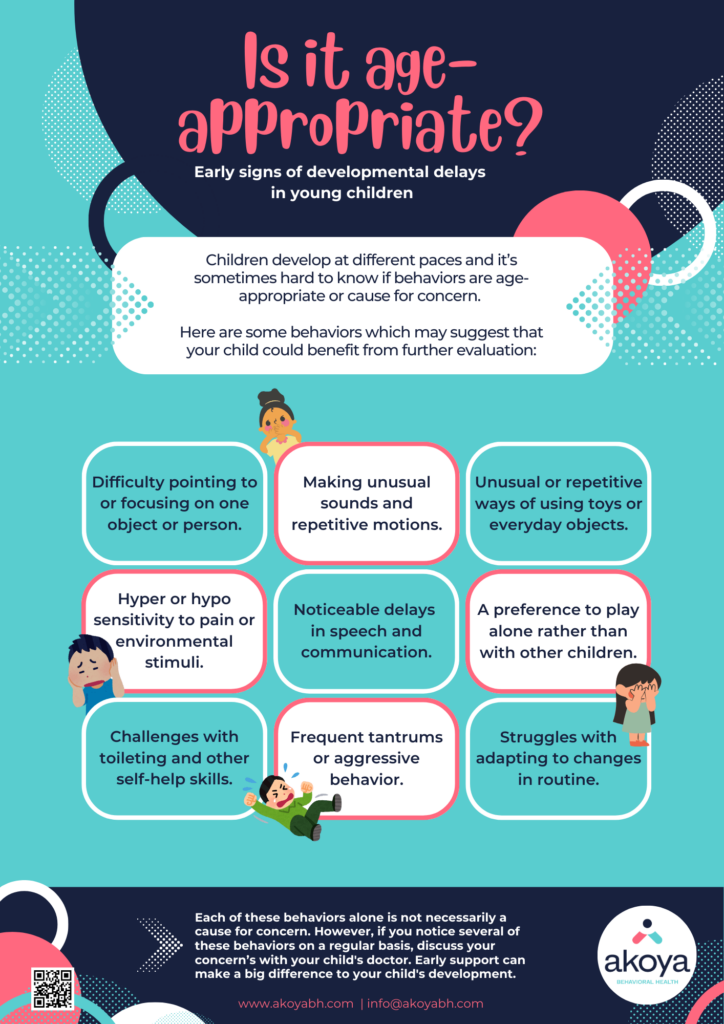
Here are some signs that are worth paying attention to, especially if you notice several of them consistently:
- Difficulty making or maintaining eye contact
- Rarely pointing to show you something interesting
- Repeating motions like hand flapping, spinning, or toe walking
- Using toys in repetitive or unexpected ways
- Strong sensitivity to lights, sounds, textures, or temperature
- Delays in speech or relying mostly on sounds rather than words
- Preferring to play alone rather than with other children
- Struggling with everyday skills like feeding or toileting
- Finding changes in routine really hard, with frequent meltdowns
Each of these signs on its own is not usually a reason to worry. But if you’re noticing several of these patterns consistently over time, a developmental evaluation can offer clarity and help identify what kind of support may be useful.
Understanding what developmentally delayed means
Hearing the phrase “developmentally delayed” can feel alarming, especially when you’re not sure what it means for your child’s future .
Being developmentally delayed describes timing, not potential. It means a child may need additional support to build certain skills, like communicating, moving, playing, or connecting with others. It doesn’t say anything about who your child is or what they’re capable of.
Many children make steady, meaningful progress once they have the right support in place. Your attention, patience, and involvement play a big part in that growth.
What causes developmental delays?
When you notice your child is developing differently, it’s natural to ask why. The honest answer is that there are many possible reasons, and most of them are completely outside of anyone’s control.
Some developmental delays are linked to genetics. Others come down to how the brain develops the pathways needed for communication, movement, or social connection. Birth complications or certain medical conditions can sometimes play a part too. Often, there is no single clear cause.
What’s clear is that parents don’t cause delayed development. You haven’t missed something or done something wrong. Children grow in their own ways, and early support can help them move forward with more confidence and less frustration.
What developmental milestones tell you
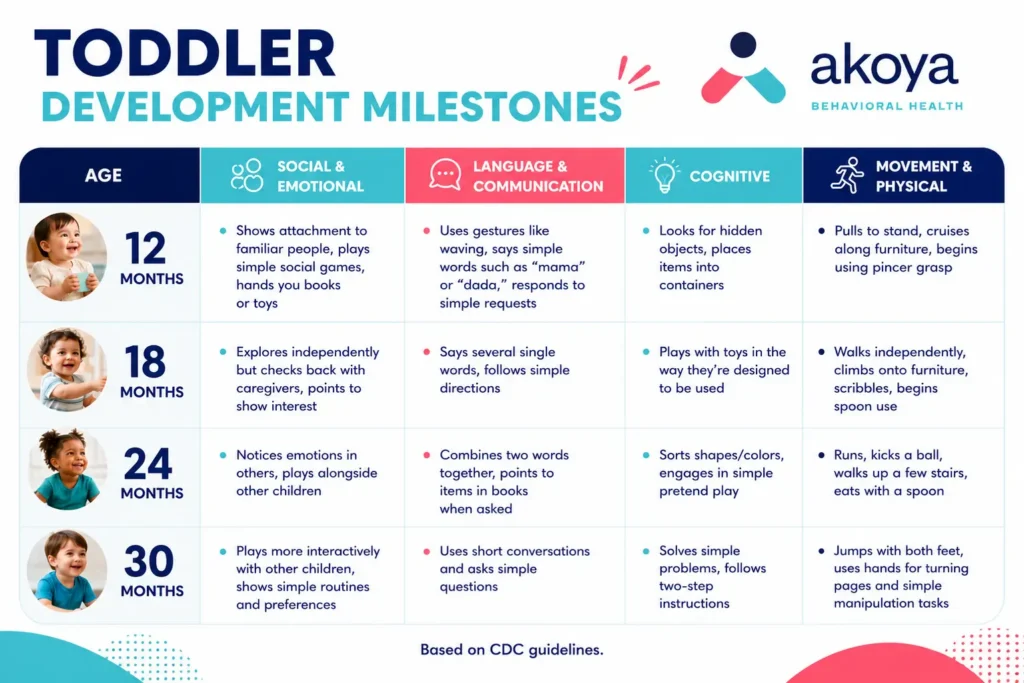
A developmental milestone is a skill most children learn within a predictable age range. They’re a useful guide for understanding early development, rather than a strict checklist every child must follow
For example, you might notice your child:
- Responding when you call their name
- Pointing to show you something interesting
- Using gestures like waving or clapping
- Trying new words or sounds
- Playing simple games
- Sitting, crawling, climbing, or walking
- Showing steady progress with routines like feeding or dressing
Some children master certain milestones early while taking more time in other areas. This is completely normal. What’s most useful is getting a sense of whether your child is making overall progress, or if they seem stuck with certain skills.
If several developmental milestones aren’t showing up within the usual age range, or if your child seems to be losing skills they had before, it’s a good idea to reach out for guidance.
When to reach out to a professional
You don’t need to wait until you’re sure that your concerns are valid. Many parents find that a conversation with their child’s pediatrician or a developmental specialist helps them identify whether their child is developmentally delayed, or simply advancing at a slower pace.
It may be helpful to reach out if you notice that:
- Your child is missing several developmental milestones
- Your child seems to be lagging behind other children their age
- You notice a consistent pattern of signs that indicate delayed development
- Daily routines feel harder than they should
- Your child is frustrated or struggles to communicate
A professional with experience in child development can help you make sense of what you’re seeing and figure out the most helpful next steps.

What kind of support will your child need?
Every child is different, and there are different types of support available..
Your child may need help with communication, social skills, emotional regulation, motor development, or building confidence in everyday routines.
ABA (Applied Behavior Analysis) therapy is one option that can help children learn new skills through positive, play-based experiences. It can be especially helpful for children who are developmentally delayed and need extra guidance with communication, behaviour, social skills, or everyday routines.
But ABA is not the only path. Speech therapy, occupational therapy, and early intervention programs can all offer meaningful support depending on what your child needs most. The goal is to find an approach that suits your child and your family.
A gentle step forward
Every parent wants to feel confident about their child’s development. If you’re noticing patterns that feel concerning, or you’re wondering whether your child might be developmentally delayed, it’s never too early to ask questions or get a little more clarity.
Akoya Behavioral Health is here to support you with understanding, warmth, and a plan that feels right for your family. You know your child best, and we’re here to walk beside you as your child grows.
When you feel ready for more clarity or support, you can get in touch to schedule a consultation with one of our caring team members.
Quick answers for parents
What does developmentally delayed mean?
A child is developmentally delayed when they are not mastering expected skills, such as talking, playing, or moving, within the typical age range. It doesn’t define who they are or their potential. It simply means they may need extra support in certain areas.
What causes developmental delays?
A child can be developmentally delayed for many reasons, including genetics, differences in brain development, medical conditions, or birth complications. Often, there is no single clear cause.
What are signs of developmental delays in young children?
Common signs of developmental delays include limited eye contact, delayed speech, repetitive behaviors, challenges with play, sensitivity to sensory input, and difficulty with daily routines. If a few of these are showing up consistently, it’s a good idea to seek professional guidance.